Cattlemen’s Young Leaders 

This summer I was contacted by the Cattlemen’s Young Leaders (CYL) committee asking if I would be interested in acting as a mentor in their program. This is an amazing program that aims to create leaders in our top young cattle producers through training, experiences and mentorship.

Although I did not know who my Mentee would be, I was given a list of her goals and objectives to get out of the program, and I was struck by how closely they followed the issues and obstacles that Aaron and I had overcome over the past 15 years on the ranch. Grazing plans, agvocacy, succession planning, and the process of building a cow herd from the ground up were all topics we have spent the past decade focusing the better part of our brains on.

Aaron and I already spend a significant amount of time volunteering for both local organizations and provincial Ag associations, so our first reaction to the mentor request was, “how can we possibly fit this in as well?” But we saw the value in passing along not only our successes, but maybe more importantly, our failures. Although we had a strong network of peers, and were extremely fortunate in coming from incredible farming families whom we learnt a lot from, we never had formal mentors. We see the value in mentorship to the Canadian Beef Industry. In our eyes, the communication of knowledge is one of the greatest barriers within our industry. So without knowing a lot about the program, we took the plunge and took on the challenge.

  
Our Mentee, Angela Kumlin, has impressed us with her intelligence and drive. Our time spent with her has been extremely productive and rewarding. I won’t give away too much of her journey, as I have asked her to write a guest post for this blog. Read about her experience here.

For more info on the Cattlemen’s Young Leaders program look here, or follow them on Twitter at @CYLProgram

Our Thanksgiving Message: Thank You for Choosing Canadian Beef This Year. 

  
These is one absolute truth here on the ranch:

We love raising beef!!

We are incredibly fortunate to be able to make a living doing what we love every day of our lives. 

Canadian Thanksgiving is this weekend, so I though it more than appropriate to share our message  of giving thanks to all of you who chose Canadian beef. 

View our Thanksgiving message HERE

Thank you!!! 


If McDonalds and A&W, Costco and Walmart can work together, why can’t we as farmers?

  
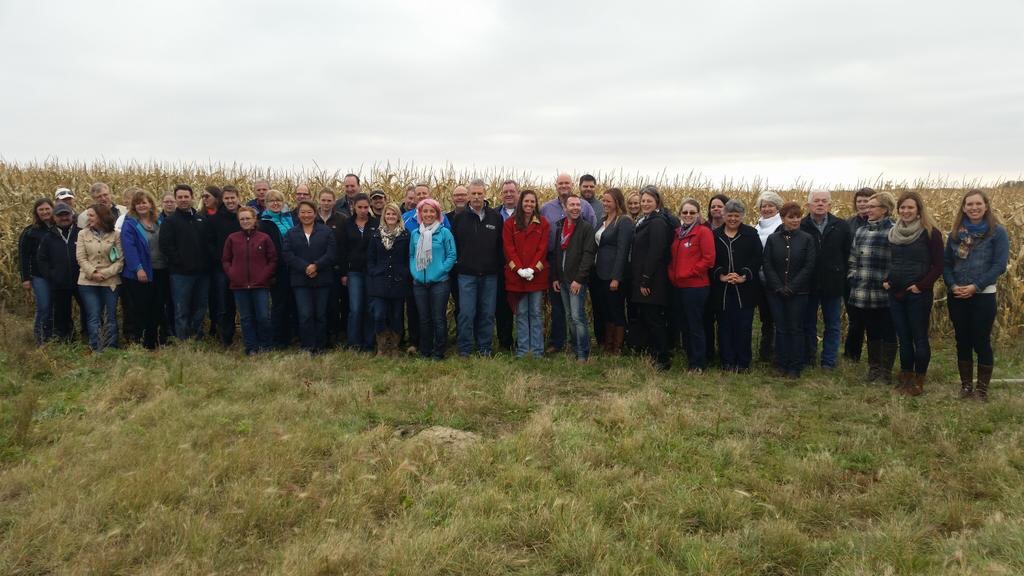
This week I had the amazing experience of acting as tour guide for the Canadian Roundtable for Sustainable Beef AGM Tour. The CRSB is an unprecedented initiative where stakeholders from the entire food chain have come together to define and improve beef sustainability in Canada. Stakeholders that have dedicated their time, effort and funds to this include Costco and Walmart, McDonalds and A&W, Producer Groups (Canadian Cattlemen’s Assn), wildlife groups (World Wildlife Federation) and packers (Cargill). It is an incredibly diverse group of people with diverse, and sometimes even divergent goals. 


             A common thread
As I chatted amongst these high level thinkers within competing industries I was struck by one overwhelming common thread. Each person there, each organization, was there for the sole purpose of making the beef industry (from the beginning, middle to end) not perfect, but BETTER. With so many opinions, and so many end goals, reaching each groups perfect goal is impossible. They each understand this fact, but it does not stop them from working together to make things BETTER. BETTER is not perfect, and it may never be, but it IS with working for. 

  What farmers can learn from this

My time recently spent on social media has been disparaging to the point of causing me to actively avoid Twitter. Agricultural in-fighting feels like it is at an all time high. Organic vs conventional, supply management vs export markets, big farms vs the little guy. It feels as though every sector of agriculture has backed itself into a protectionist corner, spitting mad and firing uncalled for shots at anyone that dares question them. 

So what would happen if we chose instead to put down the word cannons and focus on making things BETTER? Instead of ripping each other apart, we asked questions? What if we chose to stop the strive for perfection in our own section, and switched our focus to making all of Ag BETTER? Surely if McDonalds can work with A&W, then beef and dairy, organic and conventional, large and small can chose the same path. BETTER sounds good to me. Is BETTER enough for you? 


IV Branding 2015

Every year on the ranch, calves are gathered up and “branded”. Because we do not catch and tag each calf when it is born like many cattle producers do, the first time we get a hand on our calves is in late July to early August. Each herd is individually brought into one of two yards, and sorted into cows, dry cows (cows that have no calves), and calves. The calves are then put through our farm-built sorting tub and chute. Each calf is caught in the small calf squeeze and headgate. They are each vaccinated, tagged, branded and castrated (if they are males). 

  
Branding is a family affair every year. The kids love working the calves, as they are just the right size. It’s a great chance to improve their livestock handling skills for when they are older, and working fully grown animals. 


Although branding days are hard work, they are everyone’s favourite days of the summer. They not only give us the chance to get a really good look at how well we have nurtured our cattle, branding days also give us a great look at how we have nurtured the inner farmer in each of our children. 

   
Needless to say, I was bursting with pride!!

 
And the calves looked great too…


When Life and Weather Collide to Create Hell Week on the Farm

Sometimes all the planning and forethought in the world can’t save you from fate. This coming week on the farm is going to be nothing short of Hell Week. The amount of work that must be jammed into the next 5 days is daunting to say the least. 

I think that any non-farmer would be astounded at the amount of planning it takes to run and manage a large(ish) farm. Pretty much every waking moment is spent planning the year, that month, the week and the very next moment. Whatever you are doing at any given moment, farmers always need to be thinking about what comes next. Unfortunately, sometimes all the planning in the world can’t keep all the pieces from colliding. 

We (and when I say we, I mean Aaron!) create a grazing plan every winter for the coming spring, summer and fall.  It is fully planned what path each herd will follow to maximize grass and forage productivity. It changes drastically each year, so that pastures that you graze in the fall one year will get a break the next fall, and so on. One major consideration is making sure that each herd will pass by one of two yards in late July so that they can be brought in and the calves can be processed (vaccinated, tagged and branded). 

Late July is not the traditional time period for brandings. Many are done in May, or June. Because we calve into June, those times would not work for us. We need to make sure all the calves have hit the ground before we start branding. We also like late July because it usually falls in-between the two cuts of hay, and before silage season. Usually. This week we have 1200 pairs that need to be brought in, sorted (cows, calves and dry cows), and processed. 

This year has been an odd one. The lack of rain for the first three months of the growing season meant our hay crop is about 20% of what it usually is, so we had to get creative with finding feed for the coming winter. We were lucky to have 1000 acres of oats that were meant to be combined (I say lucky, but again that is where the planning comes in), that could be baled for greenfeed. It has all been cut, but we finally caught a rain last week, so now all 1000 acres need to be baled this week. 

Every year we silage the land that has been freshly seeded down to forages. We silage those acres because they are seeded with a bit of oats, which makes good feed, and because it helps the little forage seedlings grow better if those oats are removed early on. We don’t own our own silage equipment, so we get a custom silaging crew in from Manitoba to help us out. This usually happens in early August, but this year’s drought ment that the crop matured much earlier than usual. The crew will be here this week, so they need need to be organized, and fed and helped. 

Although we have been planning for this work for the past 9 months, it was supposed to happen over a month long period. Not a week! 

1200 pairs to bring in, sort, process and move back out. 1000 acres to bale. 800 acres to silage. A dozen men to feed each day. And the brain power to keep it all organized. 

Thank the lord we have awesome people the work with us, or none of it would be possible! 

I better get out there – I hear the chorus of bellows that mean #branding15 is starting!

Random Thoughts on the Long Drive Home

After a few days up in Northern Saskatchewan at Jan Lake, we headed home today. I knew I had considerable windshield time in the passenger seat (a rare occurance for me), so I asked my Facebook Friends for some suggestions on a blog post to write along the seven hour ride. I had some great suggestions, from what it’s like to vacation as a farmer, to some good lake recipes. I was pretty gung ho, and had some reasonably well formed thoughts rolling through my head. Then, lake head set in. That’s right. I got lazy. 

  
So instead, I will share a few random thoughts and even more random pictures that caught my eye on the long drive home. 

1. Sometimes it takes stepping out of your normal routine to bring you full circle. 

Noelle and I skipped a great horse show to go up to the lake. While it was a great family decision, I couldn’t help but feel like we were missing out on not only a good show, but catching up with some really good horse show friends. Turns out I not only got to spend quality family time, but also got to catch up with some REALLY great horse show friends from years ago. 

Back in my prime high school horse showing days, Vince and Sharon Walker were not just family friends. They were family. I was best friends with their oldest daughter, Alisha, and my sister was best buds with Lindsay, their middlest child. While I dare not get into details about the adventures we got ourselves into, it is safe to say that Vince and Sharon were secondary parents to me for those years. 

It was great to catch up with both of them up at Jan this weekend. It was very nice to see that Vince is as easy going as always, and Sharon still has multiple dogs by her side. The chat with them brought back a lot of great memories, and it was great to hear about what all of their three kids (and multiple grandchildren) are up to these days. 

2. Crops north of the 16 highway look great. 

  
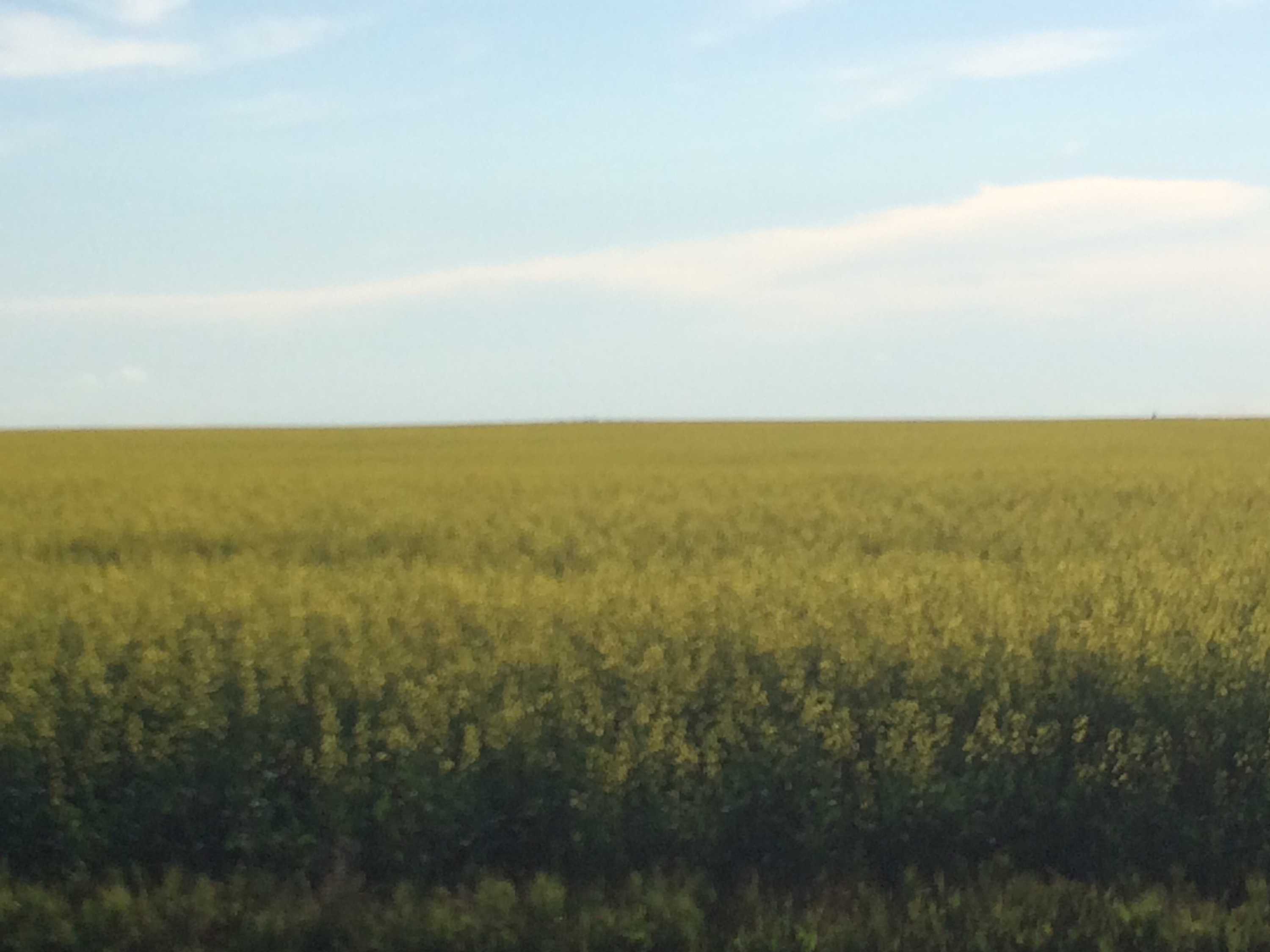
From Elfros to Choiceland, even the frost damaged or re-seeded canola looks MUCH better than around home. Cereal crops look fantastic. And there are far more hemp fields than I have ever seen in the past.  I would have taken more (and better quality) pics, but it was not worth the “I’m in a hurry to get home” conversation (aka argument).

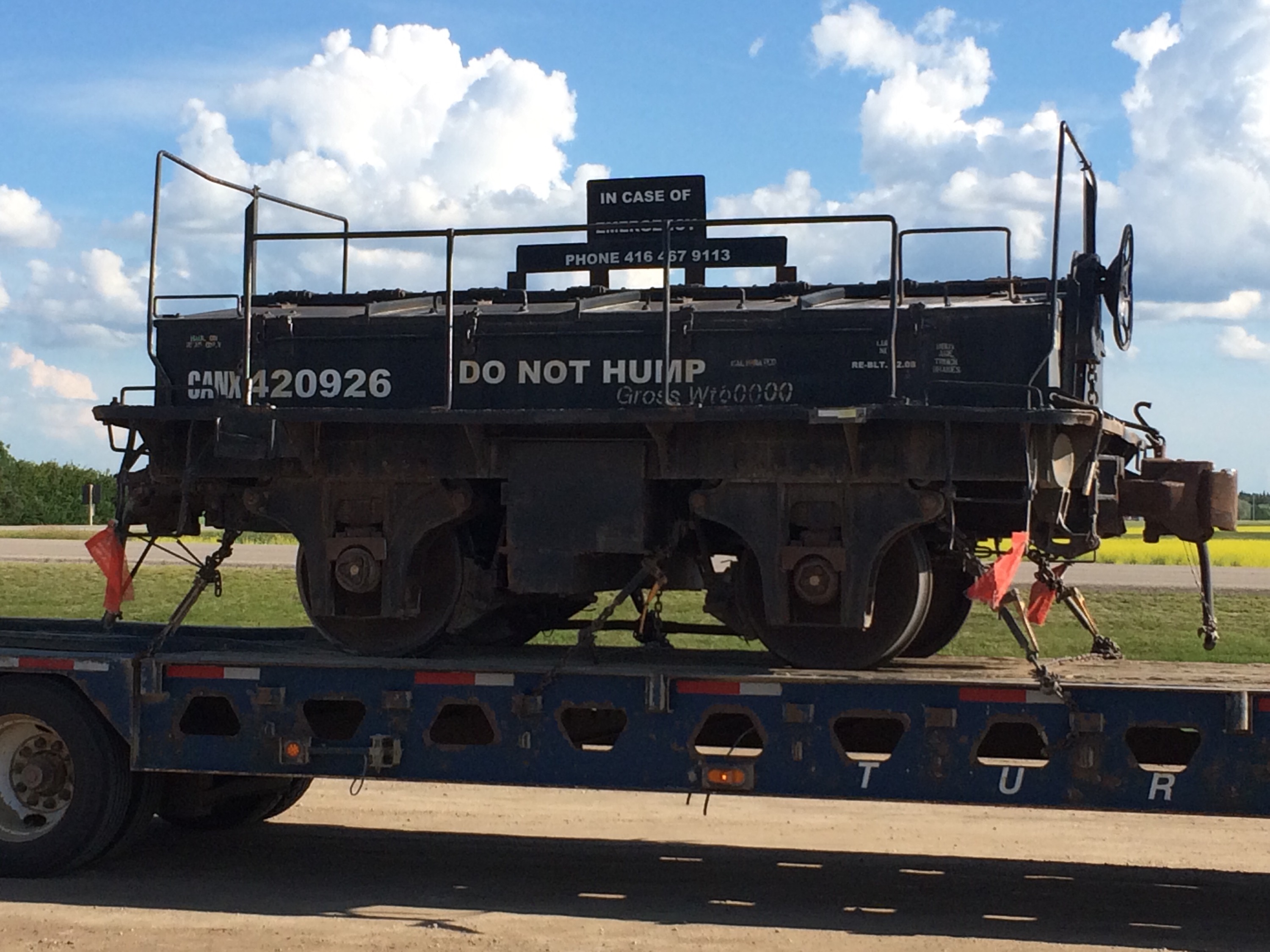
3. I have no idea what the heck this thing is, or what it is possibly used for. Whatever it is, what did they think people might do to it?? It had me stumped. And giggling. 

  
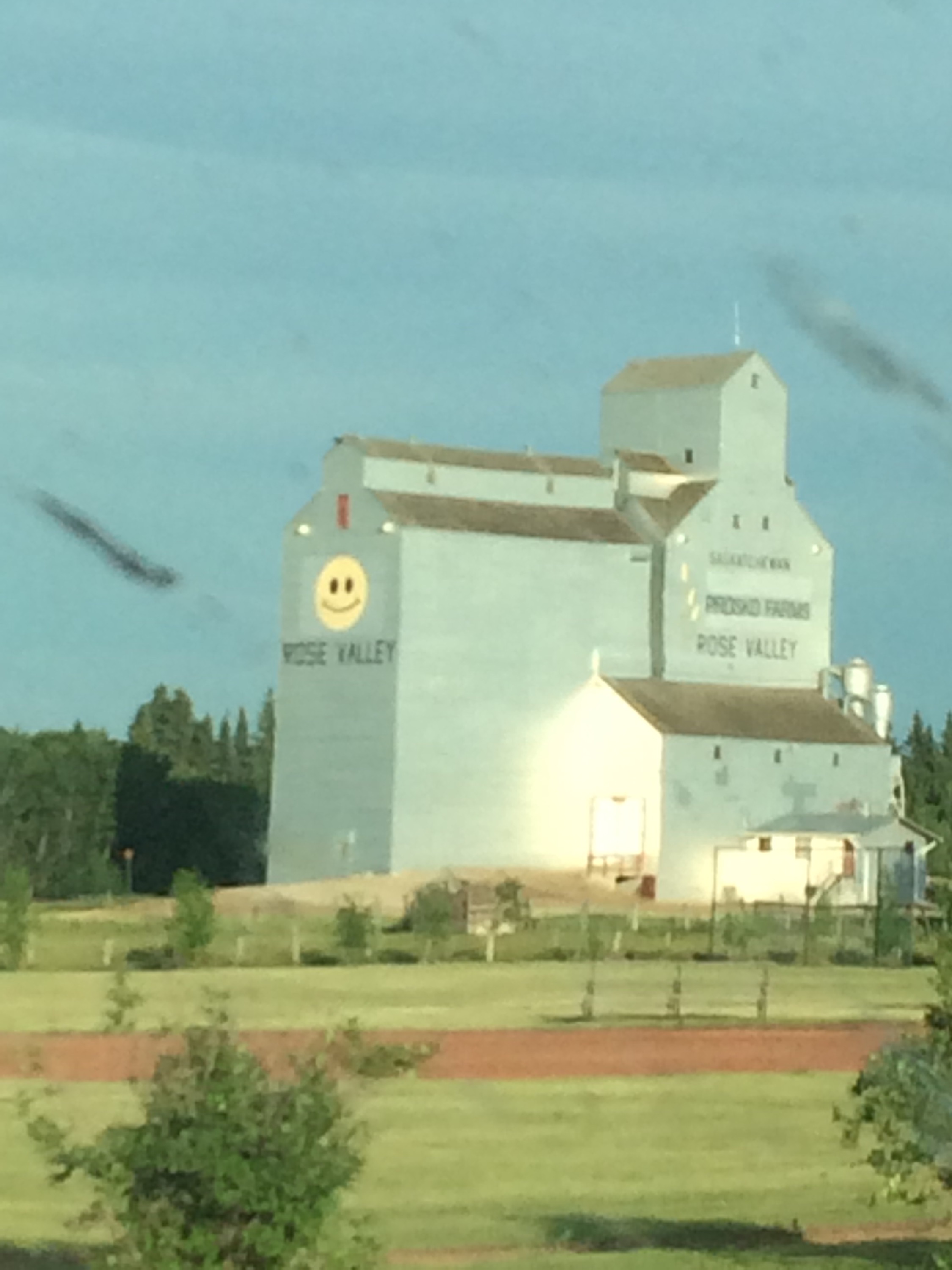
4. I love the Rose Valley elevator. I don’t know who’s idea it was to paint a smiley face on the side, but it works. It makes me smile every single time I drive past. 

  
Once again, excuse the 120km/hr fly-by shot. As well as the bug gut smears. 

5. As great as it was to get away for a few days, honestly, there is no place like home! 

6. I need to stop thinking about my blog now. What I really should be doing is typing a list (or 10 lists) of what I need to pack/do to get ready for the horse show we are leaving for TOMORROW! My head is starting to hurt, just thinking about it. 

Happy Hump Day!!

Why Most Farmers Don’t Want to Jump into Niche Markets

If I have heard it once, I’ve heard it a thousand times. 

“Why wouldn’t farmers want to grow (organic/natural/hormone free/random other stuff), people want it, and the farmers can make more money growing it.”

Here are a few reasons (right or wrong) why Farmers hesitate to jump into these niche markets. 

1. Farmers are a practical bunch. We often don’t think in terms of “why not, if we would make more money”, but more like “Why would anyone pay more ‘A’, when ‘B’ is just as healthy, safe, and delicious.” 

We have a very close relationship with the food we produce, no matter what kind of food it is. Whether it is grains, oilseeds, vegetables or meat that we grow, we spend the better part of a year nurturing it, worrying about it, and praying over it. Our profession isn’t one where you go home after 8 hours and turn off your brain. Every waking minute is spent planning on how to get the best possible growth, the healthiest crop and herd, while leaving the land in the best shape it can be in to do it all next year. After all of that, we proudly serve what we have grown to our family and friends at our kitchen tables. I promise you that I can better tell you how safe or healthy the meat we produce is, infinitely better than any fancy marketing team. 

In a farmer’s practical mind, why would he/she work harder and spend more money growing something that someone somewhere thinks might be better, when you know that what you already grow is completely awesome!

In other words, just because someone will pay more money for it, doesn’t make it right. 

2. Farmers have heard before that they will make more money. Sometimes it actually happens, sometimes it doesn’t. As long as there have been markets, there have been niche markets. One of the main reasons there are small, directed markets for any specific product is that there are significantly larger costs for producing that product. If it was really that easy, everyone would be doing it, and it would no longer be a small market. 

For example: We have raised and finished both conventional beef, and hormone-free “natural beef”. Cost of gain (the cost of producing each pound of beef) depends largely on feed prices at any given time, but if conventional cost of gain is $0.80/lb then hormone-free could be around $1.00/lb and organic beef could be as high as $1.50/lb. Natural beef premiums we have experienced in the past have been anywhere from $0.05 to $0.25. Raising natural beef involves quite a heavy load of paper-work, not to mention the extra work of feeding cattle different rations, and for longer. A twenty five cent premium may sound attractive, but not so much after you’ve taken time to consider your true costs. Top that with a fairly unstable market, and you may do all that work for one year, only to have your premium shrink or disappear altogether the next year. 

3. Fads come and go. Dairy used to make you fat, then it was carbohydrates. A great friend of mine owns the SaskMade Marketplace. She says that 4 years ago everyone came in looking for organic. Now the ask is always for gluten free. Going into a new production system always takes significant time and money. How sure can farmers be that this new one is going to last? 

4. Niche markets lack standards. Many of these small markets lack a standard set of rules that must be followed around the world. A prime example of this is the organic markets. While Canada has fantastic rules and standards that must be followed, the same cannot be said for organic food everywhere. There isn’t much more disheartening than seeing the organic flax that you poured your heart and soul, time and money into, only to have the market tank because China shipped literally boat loads of organic flax into North America. Especially when you know their fields were probably never inspected, and if they were, well, who knows what palms were greased along the way. 

A&W calls their beef “sustainable”, but what does that mean? There is no set standards around calling any beef from anywhere “sustainable”. In Canada, they ship much of their beef in from Australia. How “sustainable” is that? Compare that to McDonalds, who have been working together with environmental, government and beef producer groups for YEARS, to gather information and come to a consensus about what sustainable beef actually looks like. 

These huge gaps in standards make it very difficult to put your farmer stamp of approval on any given niche market. 

5. Farmers hate having all their eggs in one basket. By definition, niche markets are small. This means there are much fewer companies to sell your product to. This means the farmer carries a much greater risk. 

There have been instances of hauling grain to small companies, only to have them fold into bankruptcy before you get paid. Also, If there is only one company that buys product X and you want to sell your Product X in September, you better hope they are buying then. Farmers like options. Lots of options. 

6. Change sucks. Although present day farmers are more progressive than ever, there will always be a lingering fear of change. We are only human after all. When things are going well on your farm, there are few farmers that would be willing to completely change their production system. What farmers are doing on their farms today is a result of many years, sometimes even generations, of small steady changes and adjustments. To take your entire system, and turn 90 degrees in an entirely new direction is a difficult step for anyone. 

But….

All this being said, farmers do take leaps into new directions all the time. They try new crops and new systems. Sometimes it works well for them, sometimes it doesn’t. This post isn’t meant to convince any farmer not to try a new market, but rather to help an average person understand why farmers don’t always produce what you think you want at any given time. 

Saskatchewan Cattlewomen’s Golf Tournament 2015

On Thursday June 11th I gathered with a fantastic group of ladies to spend the day golfing, networking, and raising funds for a great charity. 

  
The Saskatchewan Cattlewomen’s Golf Tournament was started in 2010 by Sheri Pedersen and Cheri Wildeman. The previous year they had attended the Canadian Cattlewomen For The Cure Golf Tournament in Alberta. Although it was a fantastic event, Sheri and Cheri realized that it was difficult to spend two days travelling for one day of golfing, and they also saw an opportunity to raise funds within Saskatchewan. So with a lot of work and organizing from those two ladies, the Saskatchewan Cattlewomen’s Golf Tournement was born. 

Each year, the golf tournement and supper raise funds for the Children’s Hospital in Saskatoon. What started as a small amount, quickly grew into a substantial annual number. 

Previous Funds Raised:

          2010 $2500
          2011 $7150
          2012 $9000
          2013 $13500
          2014 $16000

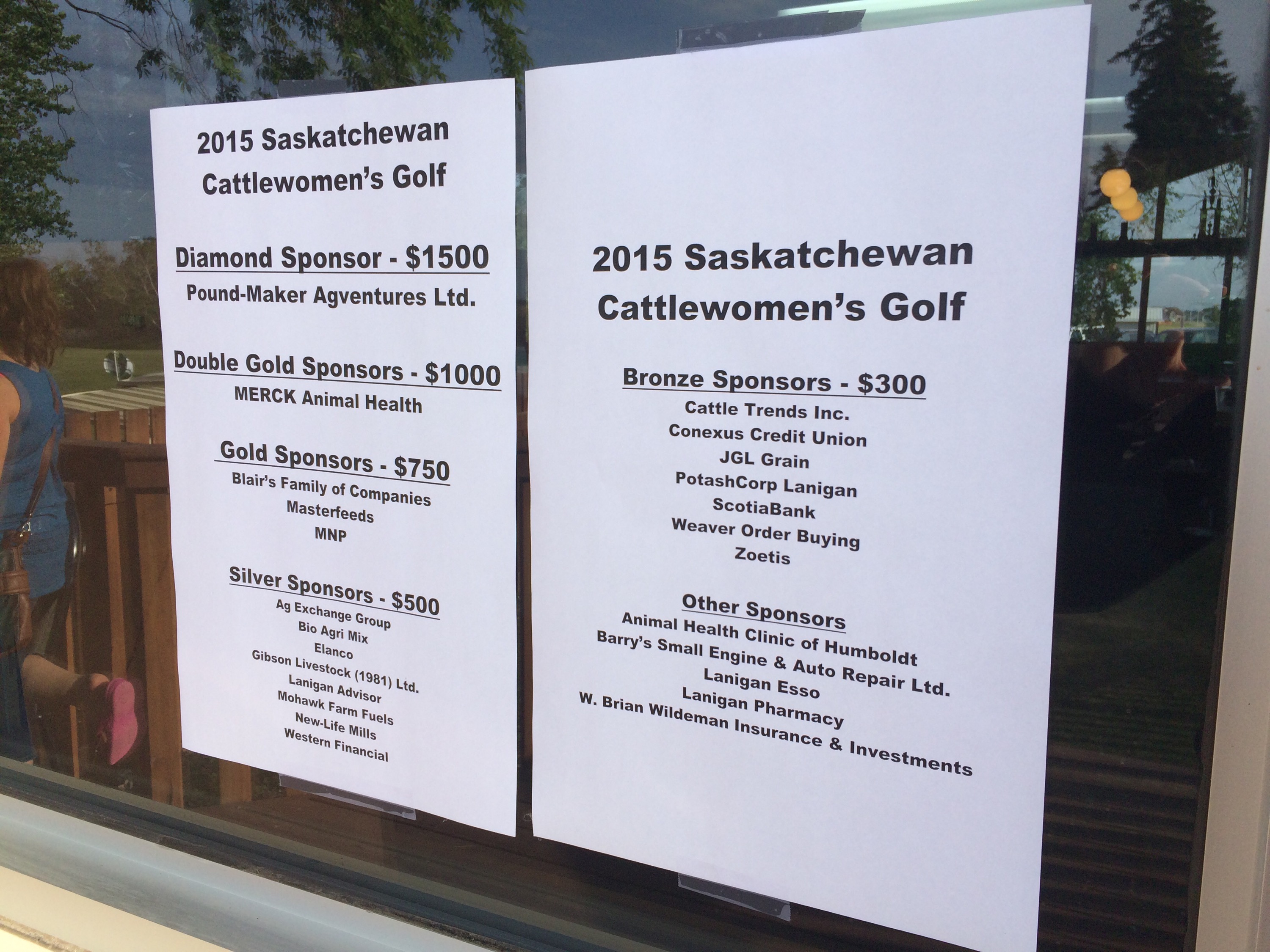
This year was no exception. With 64 golfers, and 90 for supper, 2015 was a roaring success. There were ladies in attendance from Saskatoon, Moose Jaw, Regina, Ituna, Kelliher, Duval, LeRoy, Jansen, Eastend, Tessier, St Benedict, Lockwood and Lanigan. With the help of numerous sponsors, $14,250 was raised. Over the past six years, a grand total of $62,400 has been raised for the Children’s Hospital. 

Beyond the great cause of raising funds, the Saskatchewan Cattlewomen’s Golf Tournement is a great day of networking, socializing and fun.  There is room for every level of golfer (even the very *ahem* challenged golfers such as myself), and a delicious steak supper for the non-golfers. There are prizes for the golfer’s and door prizes that everyone has a chance at. 


Brad Wildeman grilling steaks like a boss!! 

I had a wonderful time catching up with some great old cattle business friends, and creating some new contacts as well. I may have lost the odd ball in the process, but it was well worth it. 


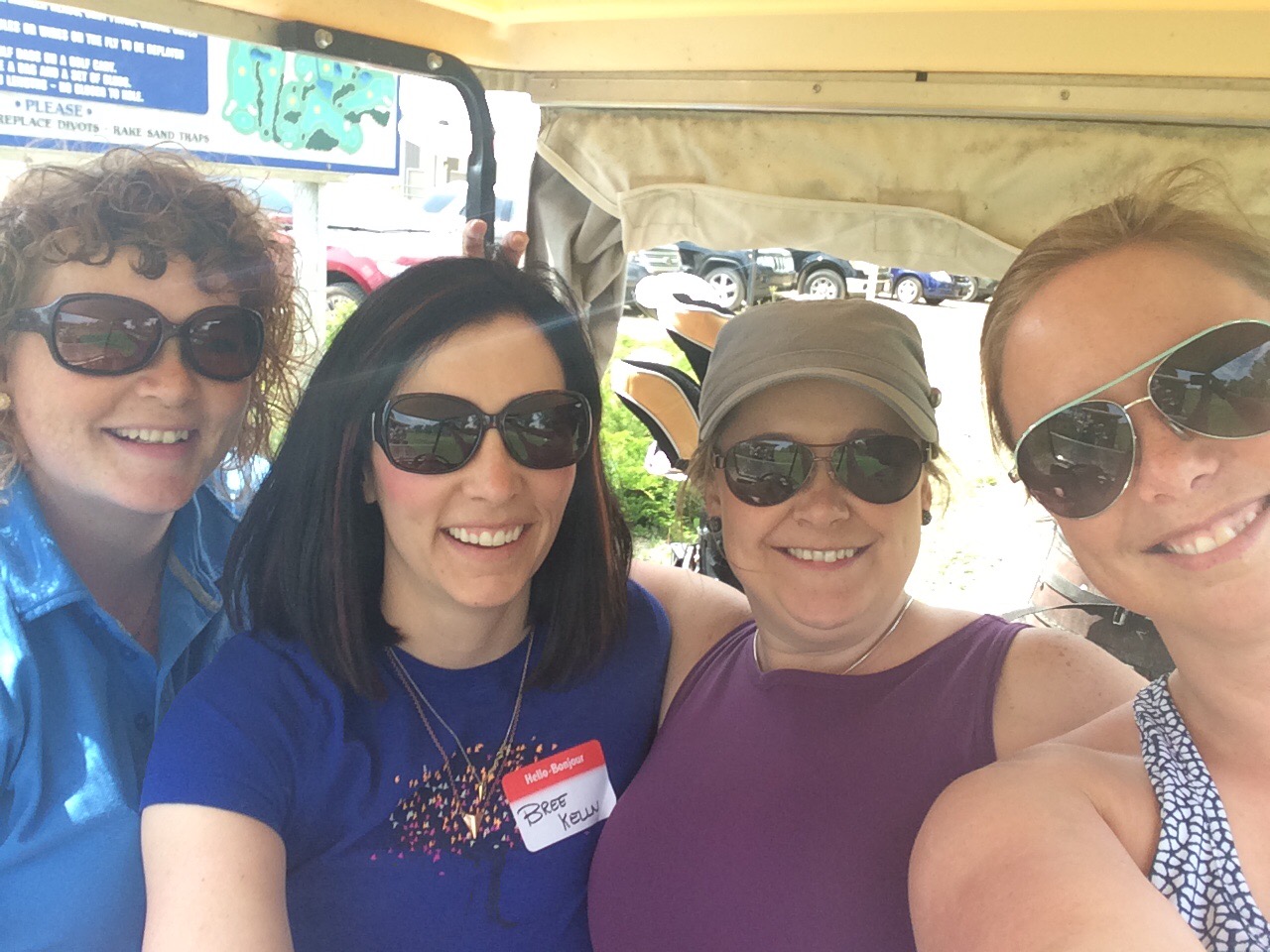
My Golf Team:
Kim McLean (Sk Ag)
Bree Kelln (Pioneer Hybrid)
Candace Ippolito (Saskmade Marketplace)
Adrienne Ivey (me!!)

 
Thank You Sponsors!!! 

What’s Up With My Instagram

I love social media. I love FaceBook for personal social interactions with old and new friends. It is also my go-to for good horse related articles, and I have been known to buy tack and show clothes through FaceBook too. Twitter is my “agriculture” place. I read technical and feel-good Ag articles. I see the news (like the fact that Tim Hortons is in hot water right now – and it’s not for their tea), talk about our farm, and fight with the odd activist. This blog is also falls under the social media category. I use it as a tool to connect with both friends and strangers. I try to engage with consumers to help give them a glimpse into the world of farmers, which seems so normal to me. I spout my opinions, and love every second of it!!

Intagram is the one social media platform that has always intrigued me, but I have never quite jumped on the bandwagon. Still to this day, I am mostly guessing on how to use it’s most basic functions, let alone how to use it to it’s max in engaging people (and it shows!). 

On Twitter, I have around 900 followers. On any given week, I will have around 500 people read my blog. On Instagram? 55 followers. Don’t get me wrong, social media is not a race to get followers. There are so many ways of using social media. To be honest, the number one reason I use FaceBook is that my 80 yr old Grandma goes there every week to see pics of her grandkids. Talking about Ag is a secondary use there. I don’t seek out new “friends”. But in my mind, Instagram could be an awesome way to bridge the gap between regular every day folk, and farmer peeps like me. If only I knew how to use it. 

So what’s up with my Instagram account these days? A great friend of mine, Jordan, has helped gently (kind of) push me into many of my current social media skills. She heckled me into getting a Facebook profile picture before I knew how to do much more than log on. I may have beat her to the Twitter punch, but she has been blogging for years. If I hadn’t experienced her amazing way of sharing her experiences on her blog, I am very sure mine wouldn’t exist today. I only wish I knew how to sit a link to her blog here. It is great! And now she is guiding my way into the world of Instagram. 

A friend of Jordan’s has started a monthly picture challenge on Instagram. She has come up with a list of words, one for each day. You need to post a picture representing the word of the day. You don’t need to post everyday, only when it works for you. I took this challenge as the perfect way to get myself more familiar with Instagram. It gives me a specific reason to post everyday. Only 4 days in, and I feel more comfortable there already. 

Here is the list of June’s words:

  
Today is June 5th, so in the back of my head I know I am looking for a photo opportunity that relates to the word “diamond”. Any suggestions? 

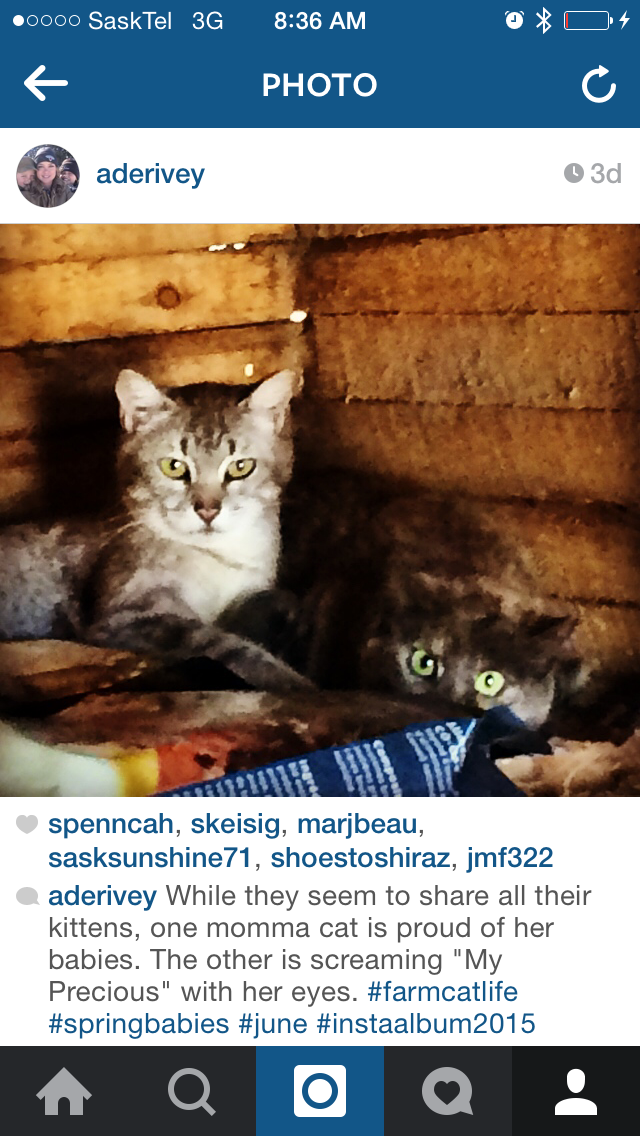
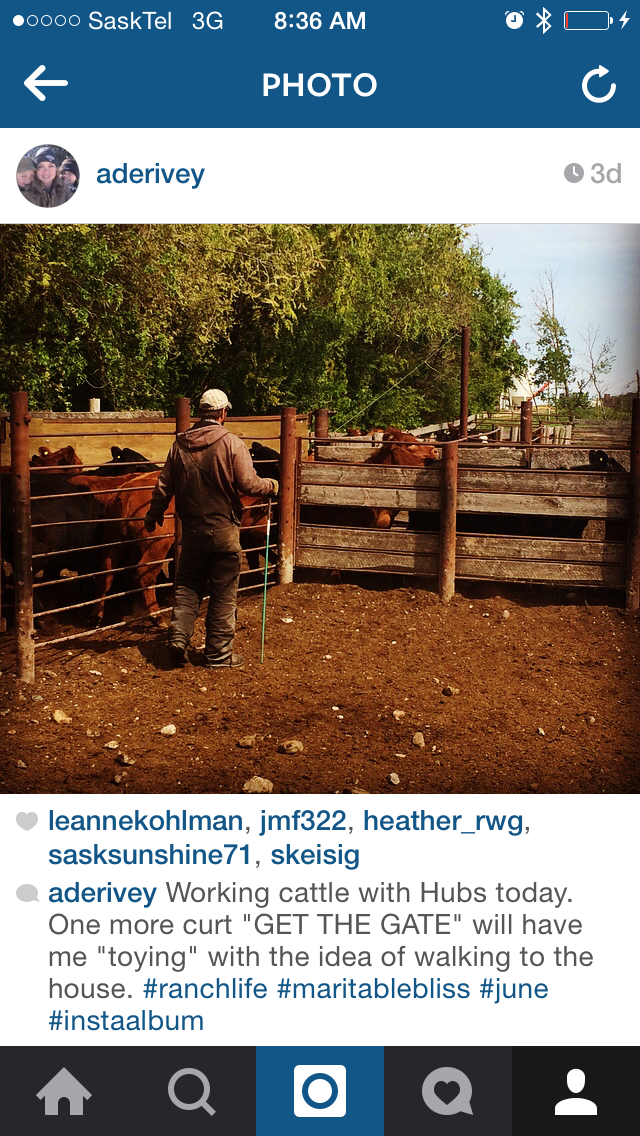
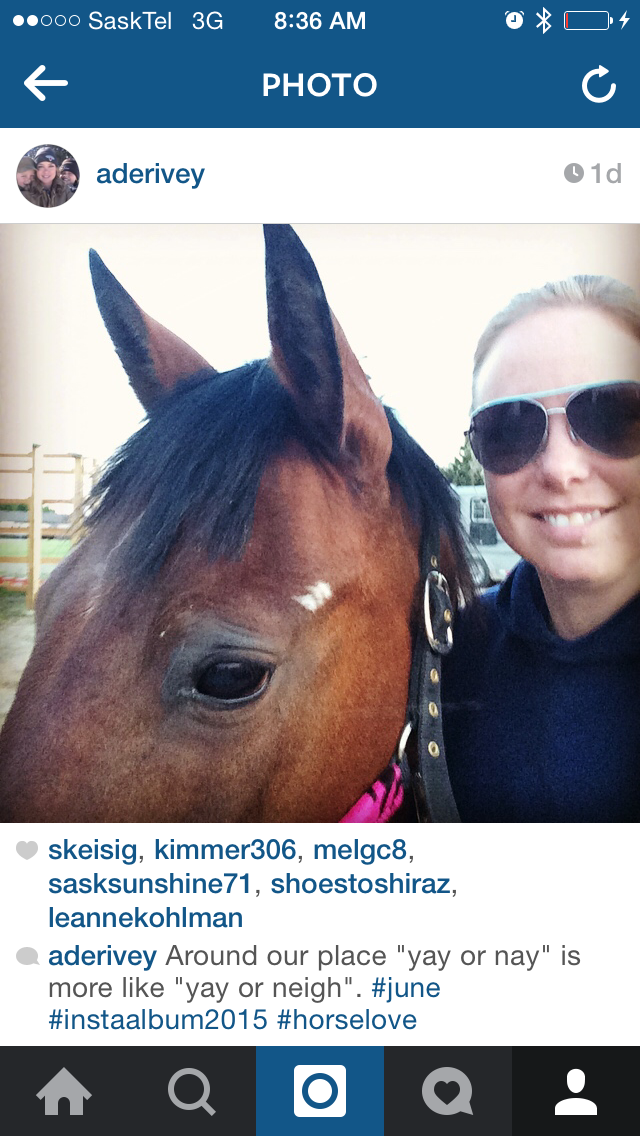
Here are a couple of my first Instaalbum posts:


So if you are one of my few followers on Instagram, now you know what is up with my slightly criptic posts. If you are not one of my followers, feel free to follow me! Or even better, play along!  

Update: Jordan has once again heckled (ok, gently nudged) me into learning something new. You will find a link to her blog here. Once again, she is awesome (and right)!!